
AI, Productivity and Apprenticeship
Reflections on work, management, and the strange new job of supervising AI agents

Many entry level positions involve repetitive tasks, such as matching databases, cleaning data, building models, updating documentation, and preparing reports. While many of these tasks can be automated, doing them helps to develop judgement and expertise, which tend to become useful later when supervising or collaborating with others.
I saw this progression in my career. I started doing technical work: data, models, code. Over time, as I moved into more managerial roles, the tools changed. SAS, SQL, Matlab, and R gradually gave way to email, PowerPoint, committees, and performance reviews. That progression, familiar in many careers, is quickly changing, as many tasks, whether technical or managerial, are being automated to some degree by AI.
The Early-Career Ladder is Changing
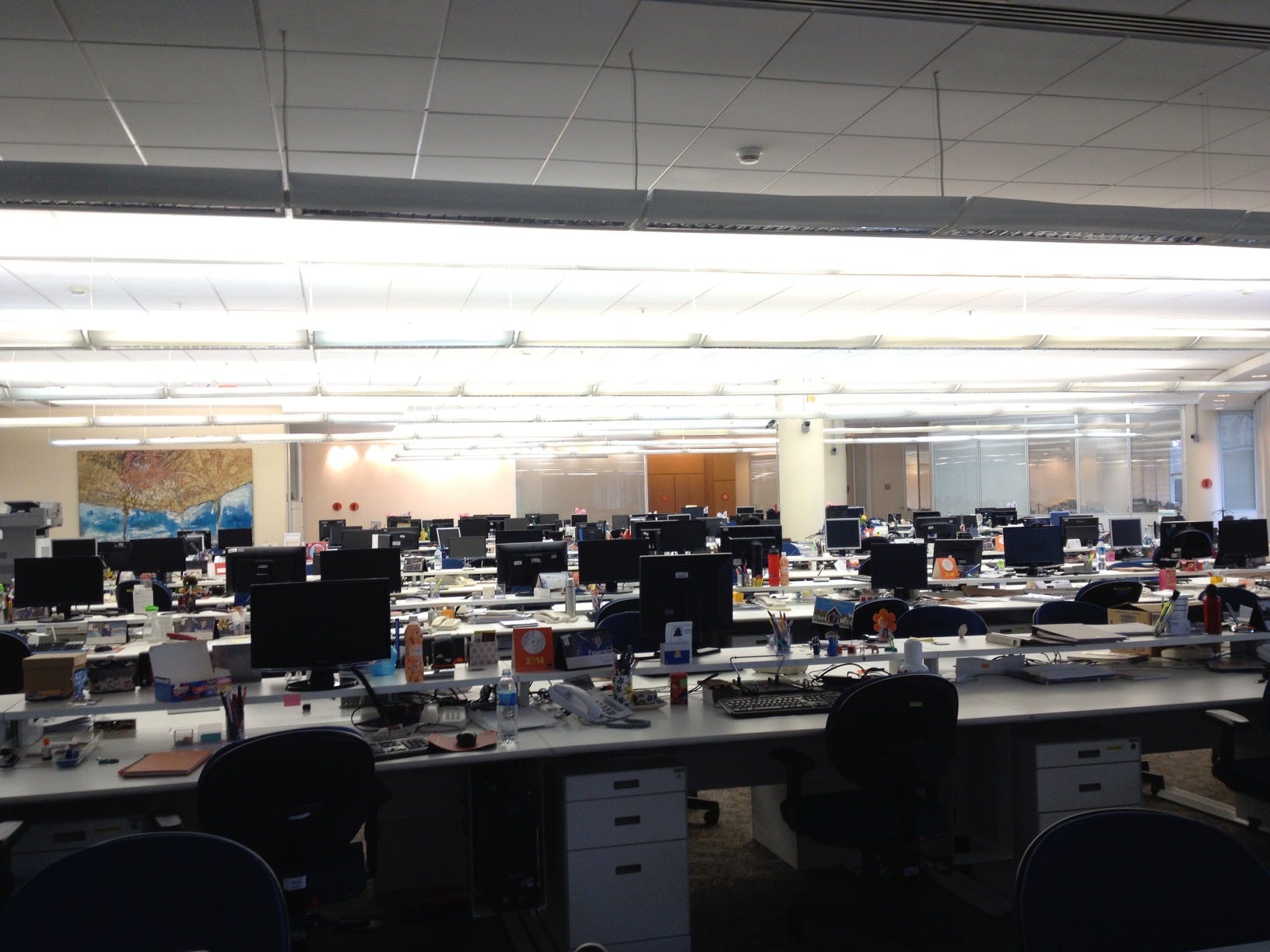
There’s credible evidence that the early-career ladder is already changing. A recent study by Stanford researchers found a 16% higher decline in early employment opportunities in occupations more exposed to AI relative to those less exposed. An analysis by The Economist, using data from recent graduate surveys from the National Association of Colleges and Employers in the U.S., has found a decline in the rate of full-time employment for graduates from nearly 70% to 55% from 2022 to 2025. These studies mirror my own anecdotal evidence. Many of my business school students are reporting difficulties finding internships.
As AI gets increasingly integrated into academic research workflows, there could also be an impact on early careers in academia. Some senior researchers have begun quietly turning to AI agents instead of research assistants to complete certain tasks. AI can competently do many such tasks, such as literature review, data collection, and coding, and some researchers’ AI budget are on par with the cost a postdoc.
Supervising Machines
As many knowledge workers increasingly delegate tasks to AI, they are finding themselves more in a supervisory or coordinating role, although they may be supervising AI agents instead of junior analysts. Some companies are already treating access to AI tools and token/compute budgets as part of the work environment, and in some cases are tracking AI usage internally. Unsurprisingly, there are also reports of employees using AI for unnecessary tasks simply because they feel pressure to show that they are using it.
Workers who rely heavily on AI are also reporting greater fatigue, particularly from the constant demands of managing agents. A recent HBR piece on AI-agent overload captures the feeling well:
“I end each day exhausted—not from the work itself, but from the managing of the work. Six worktrees open, four half-written features, two ‘quick fixes’ that spawned rabbit holes, and a growing sense that I’m losing the plot entirely.”
This example is from a developer, but the underlying issue is general: once AI tools can automate multiple streams of work in parallel, the focus changes to supervision.
The Cognitive Cost of Supervision
Although it’s still early, some of the studies on the impact of AI show potentially concerning effects on our cognitive function. Even if you’re “only” managing yourself and your own AI agents, the apparent productivity boost makes it all too easy to get stuck in a loop where you will eventually hit your cognitive limits. At a minimum, we are all managing our own time and cognitive resources across a number of competing projects.
The HBR study linked above interviewed many workers intensely using AI. The authors conclude that a higher degree of AI oversight was associated with greater mental fatigue and a stronger sense of information overload, defined as “feeling overwhelmed by the amount of information one must process at work”. So overdoing it may mean we can get more done over the short term, at the expense of our ability to function properly in the long run.
AI enthusiasts would point out that AI can also help organize projects. While that’s certainly true, it’s not without cost. Like any management system1, an AI-assisted workflow or management system has to be designed, maintained, and periodically revised.2 And because the tools keep changing, there is no obvious steady state: every week brings a new thing to try, and a new reason to feel behind.
AI Enhancement vs AI Erosion
I don’t think many people would argue that AI doesn’t increase productivity. But like any new tool or technology, there are risks and trade-offs. Currently, those risks are being sidelined by the enormous pressure to use these tools, while the narrative is being shaped by the tech companies who have collectively invested a ridiculous amount of money in AI.3 At the same time, AI cost has been largely subsidized by tech companies. Recent changes in pricing can ultimately impact how companies are using these tools, how they monitor the usage and costs, and which tasks get automated.
Nevertheless, I think it’s important to recognize that, while AI can enhance work and increase productivity, it can also undermine learning and erode apprenticeship.
For students, the research suggests that using AI tools can have positive or negative effects, depending on how they are used. In my own teaching, I've moved toward less or no screen time when students are first grappling with concepts. But I also can't ignore that knowing how to use these tools effectively is becoming a professional requirement, especially in finance. The catch is that using AI well in any domain requires actually understanding the domain first. A student who offloads their analysis to a model before they can read a balance sheet isn't learning finance, or how to use AI effectively in that domain. And educators who sidestep the topic entirely get the worst of both worlds: students who use AI anyway, learn the content less deeply, and never develop good judgment about when to trust the output.
For recent graduates and early-career workers, the situation is more complex. Not only are there fewer entry-level positions, but the nature of certain jobs is shifting quickly from doing tasks to supervising the machines who do them. We can argue that many entry-level tasks are repetitive and can, and maybe should, be automated. But doing these tasks is also how professionals used to develop judgment and expertise. If those tasks disappear too quickly, we may end up with more people supervising work that they never really learned deeply how to do.
I’m currently implementing something based on Karpathy’s LLM wiki. It seems promising and setting it up wasn’t complicated. Let’s see if I stick to it.
The numbers vary, but they are all very large. Here are some examples: